

Course Description
CRICOS: 116534F
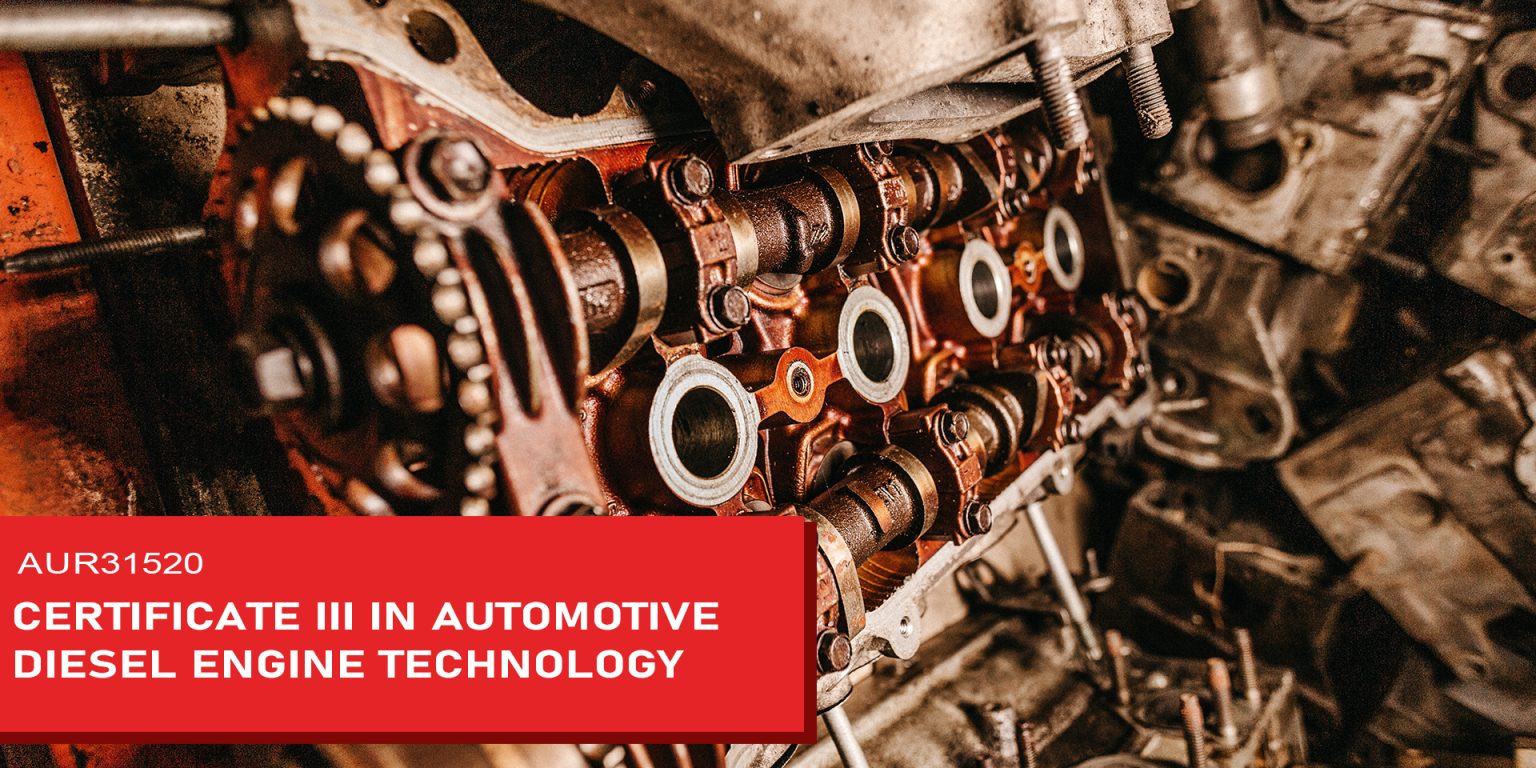
This qualification reflects the role of individuals who perform a range of tasks on a variety of diesel engines and associated systems in the automotive retail, service and repair industry. Students will gain practical skills through hands-on workshops, complemented by theoretical knowledge covering engine systems, diagnostics, and safety procedures. Upon completion, graduates will be equipped to pursue a successful career in the diesel engine and heavy vehicle service industry, with opportunities across various sectors.
No licensing, legislative or certification requirements apply to this qualification at the time of publication.
COURSE OVERVIEW
Duration:
- 78 weeks including 60 weeks of study and 18 weeks of holidays.
Mode of Study:
- Face-to-face Classroom-Based Learning
- Practical Training and Assessment
- Work-Based Training
Mode of Delivery:
This program is delivered face to face
Delivery Schedule:
- Classes are rostered for 2½ days per week.
- Full-Time studies require students to attend a minimum of 20 scheduled course contact hours per week.
Fees
Enrolment Fees: $250
Tuition Fees: $17000
Material Fees: $1000
Training and Assessment strategy
Throughout the course, you will be able to develop knowledge and skills by participating in various learning activities such as;
- Face to face discussions
- Group activities
- Research tasks
- Team building activities
- Industry excursions
- Guest speaker sessions
- Written assessments
- Role-plays and other skill demonstrations
- Presentations
- Projects/Portfolio Evidence
- Oral/verbal assessments
You will need to complete assessments for this course which may include:
- Written questions
- Projects
- Presentations
- Reports
- Role plays/observations
Work Based Training
The Work Experience or Vocational Placement component of this qualification is delivered over a 10-week period, with 20 hours of work per week to meet the work experience requirements. This hands-on experience helps students develop essential employability skills, gain a solid understanding of the work environment, and explore various career options and pathways. It serves as a valuable foundation for their ongoing professional growth and life-long learning.
Recognition of Prior learning
Recognition is available upon request students with prior skills, experience, knowledge, or qualifications obtained from formal studies or training, in a related area. Recognition may reduce the duration of your studies.
ENTRY REQUIREMENTS
Academic Requirements
- Completion of high school studies equivalent to Australian Year 12 (international students only, year 11 or equivalent) schooling OR
- Completion of secondary school /A level education overseas OR
- Demonstrated knowledge, skills and experience in the automotive industry as per AQF requirements
English Language Requirement (for international students only):
In instances where the Department of Home Affairs (DHA) requires evidence of English language proficiency for student visa application, you will need to provide proof that you satisfy one of the following English language requirements:
- IELTS Test Score of 6.0
- PTE Academic Test Score of 52; OR
- Cambridge English Test Score of 169 OR
- OET Pass Grade; OR
- Currently studying in Australia and have studied for a period of 6 months or more at AQF Certificate III level or above.
CAREER PATHWAY
Qualification Pathway
Students who complete AUR31520 Certificate III in Automotive Diesel Engine Technology may progress to AUR 40216 Certificate IV in Automotive Mechanical diagnosis.
Job Outlook
This qualification enables the student to seek employment in the following possible job roles:
- Diesel Engine Mechanic
- Diesel Engine Technician
INTAKES DATES
| Intakes 2024 Term 1: Monday, 8 April 2024 Term 2: Monday, 8 July 2024 Term 3: Monday, 7 October 2024 |
Intakes 2025 Term 1: Monday, 6 January 2025 Term 2: Monday, 7 April 2025 Term 3: Monday, 7 July 2025 Term 4: Monday, 6 October 2025 |
| Intakes 2026 Term 1: Monday, 5 January 2026 Term 2: Monday, 6 April 2026 Term 3: Monday, 6 July 2026 Term 4: Monday, 5 October 2026 |
Intakes 2027 Term 1: Monday, 4 January 2027 Term 2: Monday, 5 April 2027 Term 3: Monday, 5 July 2027 Term 4: Monday, 4 October 2027 |
| Intakes 2028 Term 1: Monday, 3 January 2028 Term 2: Monday, 3 April 2028 Term 3: Monday, 3 July 2028 Term 4: Monday, 2 October 2028 |
Intakes 2029 Term 1: Monday, 8 January 2029 Term 2: Monday, 2 April 2029 Term 3: Monday, 25 June 2029 Term 4: Monday, 17 September 2029 |